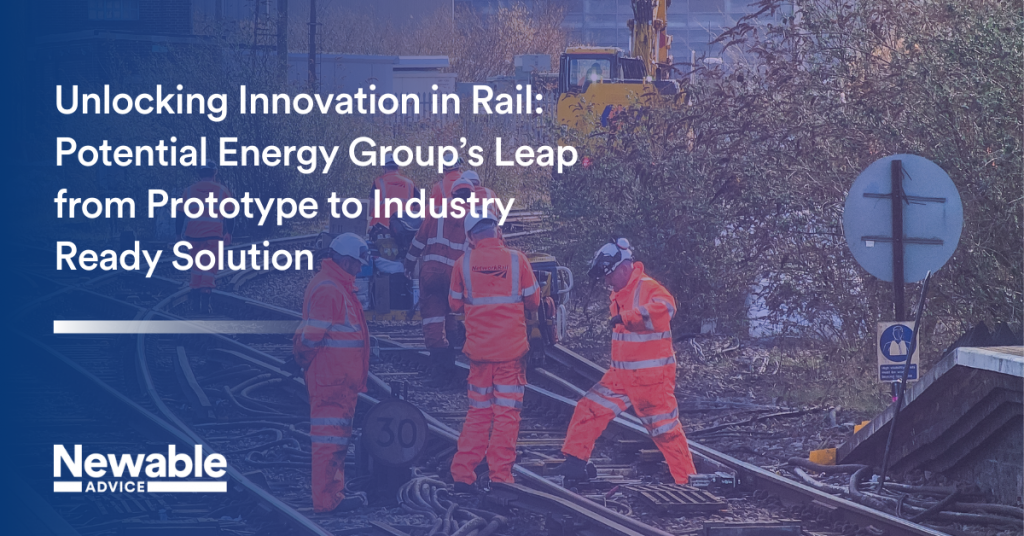
Potential Energy Group is pioneering a breakthrough in rail infrastructure monitoring with its Rail Power innovation. This technology captures vibration signatures and applies advanced AI models to detect changes, forecast degradation and identify root causes. The system is built on low power, structure mounted sensors designed for long term monitoring, paired with mechanism level insights and dashboards that integrate seamlessly into operator workflows.
Before joining the Open London Accelerator Programme, Founder Steve Dunn had a promising concept but faced a familiar startup challenge, transforming technical innovation into industry ready value.
Like many early-stage tech innovators, Potential Energy Group struggled to navigate the commercial landscape:
- Limited understanding of the go‑to‑market strategy
- Difficulty identifying and approaching collaborators
- Lack of access to end users and infrastructure stakeholders
- Uncertainty around how to position the product and generate industry pull
Rail Power needed guidance, networks and strategic clarity to evolve from idea to proof of concept, and ultimately, toward market readiness.
Steve’s journey began at the Open London Accelerator Programme workshops, where he connected with Newable Advice Innovation adviser, Daniel Abdelmassih and other Founders tackling similar challenges. The programme provided a blend of workshops, in‑person mentoring and ongoing email guidance focused on practical, founder friendly support.
Through these sessions, Steve gained:
- Refined pitching techniques to articulate Rail Power’s value to funders and operators
- Strategic insights into collaboration, product‑market fit, and stakeholder engagement
- Connections that opened doors to real-world testing and industry conversations
- Confidence in navigating the wider innovation and transport ecosystem
Thanks to support from Daniel and the programme, Potential Energy Group has gained significant momentum across several critical areas of development. The Rail Power solution progressed from TRL3 to TRL5, marking a substantial step towards commercial readiness as the technology matured and proved more reliable in real-world applications. Meanwhile, the company secured trusted industry partners, enabling them to deploy hardware and start collecting genuine environmental data, an essential milestone in validating their product.
With these partnerships established, Potential Energy Group began live trials with end users, enabling them to test and improve the system within operational rail settings. This progress also helped the team to craft a strong funding proposal, supported by new insights and empirical data that demonstrate the system’s value and potential impact. Additionally, attending a major trade fair increased their market visibility, offering valuable contacts, strategic advice and future collaboration opportunities.
What began as a promising concept has now evolved into a tested, validated and industry relevant solution poised for further growth and adoption.
The Open London Accelerator Programme helped Steve and Potential Energy Group unlock the pathway from innovation to implementation. By combining technical excellence with strategic support, Rail Power is now positioned to reshape predictive maintenance in rail infrastructure, strengthening resilience, reducing operational risk and helping operators make smarter, more targeted interventions.
Learn more at: https://advice.newable.co.uk/